
|
The Blue Stream pipeline project is a major gas pipeline carrying natural gas from Russia to Turkey across land and the Black Sea (to diversify Russian gas routes). The pipeline is owned and operated by Blue Stream Pipeline BV, which is a Netherlands joint venture including Gazprom of Russia and Eni of Italy. "The Blue Stream pipeline project is a major gas pipeline carrying natural gas from Russia to Turkey."
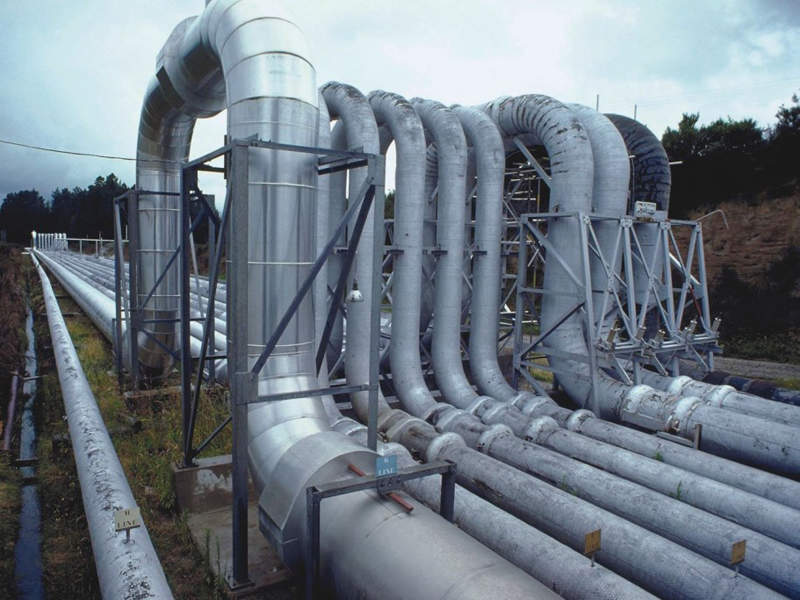
The joint venture owns the sea section of the pipeline and the Beregovaya compressor station, Gazprom owns the section of the pipeline on Russian territory and BOTAS owns the section of the pipeline on Turkish territory. Construction started in 2001–2002 and the pipeline was inaugurated in November 2005 (a new extension is now planned). The original pipeline cost $3.4bn to construct (subsea section cost $1.7bn) and used pioneering pipe-laying methodology. Blue Stream will be operating at its full design capacity of 16 billion cubic metres of gas a year by 2010 (to supply agreed gas contracts between Russia and Turkey of around 60% of Turkey’s domestic requirements). BLUE STREAM PURPOSERussia made an agreement with Turkey in 1997 to supply around 364.5 billion cubic meters of gas in the period from 2000 to 2025. There was an existing pipeline route which crossed several countries including the Ukraine, Moldova, Romania and Bulgaria. However according to the Russians this route would make the gas more expensive and there were allegations that gas would be illegally tapped from the pipeline as it passed through these countries – particularly through Moldova and Ukraine. Hence a new pipeline (Blue Stream) was planned that would avoid all of these other countries and remain solely on Russian and Turkish soil and cross the Black Sea. Although there have been political rumblings over the pipeline it was completed and has become a success. Turkey no longer needs all the gas it signed up for and can export a proportion of it if required. PIPELINE CONSTRUCTIONThe Engineering Procurement Construction and Installation (EPCI) contract was awarded to Saipem (a subsidiary of Eni). The steel pipe for the project was provided by a number of suppliers including Corus, Nippon Steel, Sumitomo, NKK and Klawasaki Steel (pipe was coated by BSR in Hartlepool, UK and Price coaters in Leith, Scotland). There are three main sections to the pipeline; a 222-mile section in Russia, a 235-mile section under the Black Sea (some as far down as 2km) and finally a 300km section in Turkey. The pipeline route runs from Izobilnoye gas plant to Dzhugba (222 miles) including the Stavropolskaya and Krasnodarskaya compressor stations and the Beregovaya compressor station in Arkhipo-Osipovka, Dzhugba to Samsun (Durusu Terminal 40 miles from Samsun) across the Black Sea (235 miles) and finally Samsun to Ankara (300 miles). For the Black Sea section the shallow-water sections (380m) were laid by the Castoro Otto, while the deeper sections were laid by the Saipem 7000 (J-lay method, which causes less stress). The pipeline was laid in different diameters in different regions with 1,400mm pipe for the main land section, 1,200mm pipe across mountain regions and 610mm in the subsea sections (in the subsea section the pressure of gas is around 250atm). "The Blue Stream pipeline may be extended to carry Russian gas further into Europe."
BLUE STREAM EXTENSIONThere has been much discussion about extending the Blue Stream pipeline to carry Russian gas further into Europe. As early as August 2005 President Vladimir Putin was advocating the extension of Blue Stream through Bulgaria, Serbia and Croatia to Western Hungary, although there is a competing project – the Nabucco Pipeline (a consortium of European countries trying to avoid so much reliance on Russian gas). Construction of the second phase of Blue Stream will give Russia the scope to expand gas export to the west (to regions of Central Europe via the new planned Turkey-Bulgaria-Serbia-Croatia-Hungary pipeline) and then also to the south via the Samsun-Ceyhan gas pipeline further to Israel and the Lebanon. In June 2006 Gazprom and MOL of Hungary signed an agreement to carry out a study into the plans to extend Blue Stream towards the south (Turkey to southern Europe). Hungary would act as a distribution centre in the Balkans for Russian gas and there would be gas storage facilities for at least ten billion cubic metres of natural gas. The project has been loosely costed at around €5bn ($6.3bn). Currently the extension of Blue Stream towards Hungary is a definite alternative to Nabucco, which will not begin construction until 2009. |
![]() Expand ImageThe route of pipelines in Europe. |
![]() Expand ImageConstruction of the Blue Stream pipeline was not thought to offer any environmental risk. | |
![]() Expand ImageBlue Stream pipeline may well be extended to supply southern Europe. | |
![]() Expand ImageThe Blue Stream pipeline forms an important route for Russian gas across the Black Sea. | |
![]() Expand ImageThe laying of the Blue Stream pipeline used much pioneering technology. |
Related links
Nabucco Gas Pipeline