
|
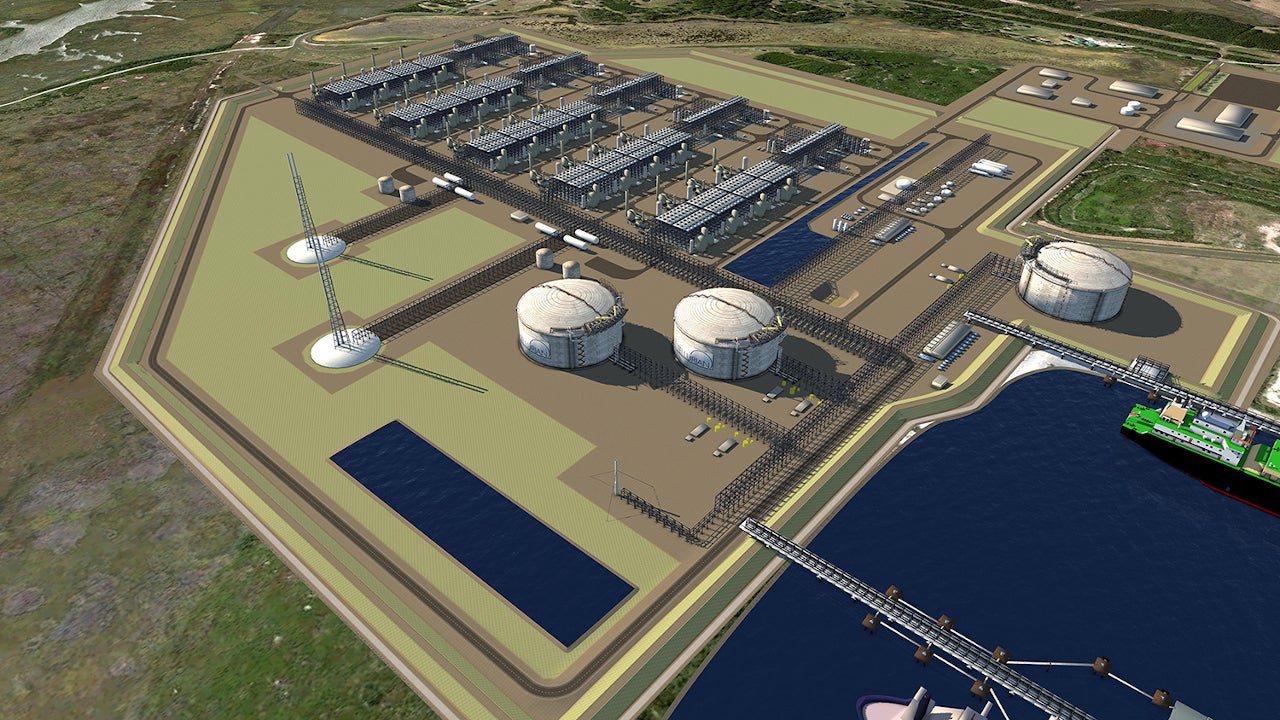
 The Energia Costa Azul LNG terminal project is scheduled to be completed by 2008 and will have the capacity to process 1 billion ft³ of natural gas per day.
|
 The Cameron LNG terminal is expected to commence operations in 2008 and be capable of processing 1.5 billion ft³ per day of natural gas.
|
 Construction on the Port Arthur LNG project is expected to begin in 2006 with operations commencing in 2009.
|
 Overview of the Pemex Salamanca refinery.
|
 View of the Salamanca refinery.
|
 Pemex also has a refinery in Tula which is being expanded.
|
 Salamanca is in the state of Guanajuato in central Mexico.
|
 Map showing location of the project.
|
 The Scotford upgrader.
|
 A gas pipeline is being constructed to supply fuel to the power station for the Scotford refinery.
|
 The plant.
|
 Aerial view of the project.
|
 Construction work.
|
 The Freeport LNG terminal is scheduled to begin delivering gas in mid-2007.
|
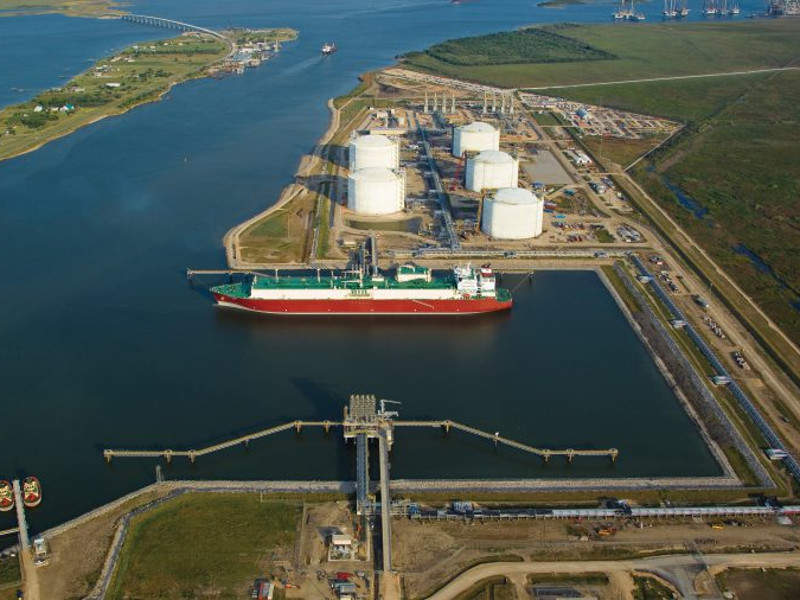
 Aerial photograph of Freeport where the LNG terminal is being constructed.
|
 Plan of the terminal area showing areas under different lease restriction.
|
 Diagram showing the areas around Freeport and their gas requirements.
|
 A natural gas pipeline will extend from the LNG import terminal to the proposed Stratton Ridge Meter Station for connection to the intrastate gas pipeline system.
|
 The chosen site had to have a 45ft draft channel to open water and a port facility sufficient to service LNG carriers.
|
 Facilities at the port will comprise LNG ship docking and unloading facilities.
|
 Pemex's (Petroblas Mexicanos) oil refinery expansion in Cadereyta, Mexico, had its official start in April 2002.
|
 The Cadereyta Refinery Reconfiguration Project (CRRP) is improving the structure of the Mexican petroleum industry.
|
 The Cadereyta refinery at night.
|
 14 other plants, including a refinery plant producing 155,000bpd of fuel and a 65,000bpd fluidised catalytic cracking plant, have been revamped, modernised and expanded.
|
 Detailed map of the Northstar project in the Beaufort Sea (to the north of Alaska).
|
 The frozen Beaufort Sea had to be levelled for the construction to begin.
|
 Rollagons are essential to the construction process.
|
 An aerial view of work on the pipeline road of the Northstar project.
|
 An explosive array at a gravel mine. The gravel was used for building on Seal Island.
|
 More than 10,000 truck trips were needed just to shift the gravel.
|
 Map of the planned Alaska North Slope LNG Project.
|
 LNG tankers will take the product away from the Nikiski gas to liquids facility.
|
 The Alaska North Slope project has four sponsors: Phillips Alaska, BP Exploration (Alaska), Foothills Pipelines and the Marubeni Corporation.
|
 The Alaska North Slope LNG project is driven by a conviction that the demand for LNG will drastically outrun the LNG supply by 2010.
|
 The Lake Charles refinery.
|
 The Lake Charles refinery from above.
|
 The refinery, which has an independently appraised replacement value of approximately $86 million, is situated on 87 acres of land adjacent to a river accessible from the Gulf of Mexico, facilitating transportation via barge.
|
 American Petroleum International has a terminal in Houston and refineries in Houston, Lake Charles and St Marks.
|
 American Petroleum International also has a refinery at St Marks in the Florida panhandle.
|
 The Na Kika project is a major offshore development in the Gulf of Mexico. The fields being developed are Kepler, Ariel, Fourier and Herschel, in which Shell and BP each have a 50% share, and East Anstey, in which BP has a 62.5% interest and Shell a 37.5% interest.
|
 The fields will be exploited from an offshore host platform. The Kepler, Ariel, Herschel, Fourier, Coulomb and East Anstey fields will all be connected to the offshore platform (and each other) by a complicated network of subsea installations.
|
 Shell already has an extensive range of offshore hydrocarbon operations in the Gulf of Mexico. The map shows the oil projects operated by Shell, the gas projects operated by Shell and the many offshore hydrocarbons project in which Shell has an interest.
|
 Following completion of the Early Entry Co-Production (EECP) research, development and testing program in 2003, a new EECP plant is planned for Gilberton, Schuylkill County, PA.
|
 The liquid fuel production process at the EECP plant.
|
 Pennsylvania is estimated to have over 34 billion t of coal and waste coal in ground reserves, and the US as a whole 1,600 billion t.
|
 The technology is based on the gasification of waste coal residue, followed by a liquefaction process to produce sulphur-free low particle diesel.
|
 WMPI's first plant will be a 5,000b/d facility built on a 75-acre site adjacent to the existing Gilberton Power Plant.
|
 The project feedstock requirements are 12,000,000t/yr (400,000,000t over the 35-year lifetime of the project) of 10,000 BTU run-of-mine coal or coal dust waste.
|
 It is hoped that the Gilberton project will reclaim large areas of Schuylkill County from the acres of anthracite culm piles and silt ponds that cover the area (these will provide the necessary feed-stocks).
|
 Diluent recovery units (DRU 7-3) viewed from coker (8-3).
|
 Aerial view of construction site (units 18-2 to 9-4).
|
 Coker under construction.
|
 Coker 8-3 vessel.
|
 Hydrogen unit under construction.
|
 View of pipe racks from 8-3 elevator.
|
 West view of the new pipe rack.
|
![Upgrader expansion (UE-1) and underground piping [right].](/projects/syncrude/images/syncrude8s.jpg) Upgrader expansion (UE-1) and underground piping [right].
|
![Pipe rack module lift [left] deaerator module lift [right].](/projects/syncrude/images/syncrude9s.jpg) Pipe rack module lift [left] deaerator module lift [right].
|
 The mining process.
|
 The synthetic crude produced at the Syncrude facility.
|
 The new UE-1 plant and DRU.
|
 Equipment for mining the oil sand.
|
 Formation of the slurry during the extraction process.
|
 Map showing the location of the Orinoco tar belt and the location and extent of the Hamaca field.
|
 The upgrader will accept extra-heavy sour crude oil mobilised with diluent.
|
 Construction of the heavy crude upgrader.
|
 Map of Venezuela showing the major cities.
|
 Graph detailing oil production in Venezuela during 2002 to 2003 and showing the effect of the PdVSA strike in early 2003.
|
 Construction of the heavy crude upgrader at Jose industrial complex in Northern Venezuela.
|
 The Hamaca project concession area in the Orinoco tar belt.
|
 Vast fields of natural gas reserves were discovered in the Northern Frontiers of Canada and Alaska in the 1970’s, but until now demand was not sufficient to make investment in infrastructure necessary.
|
 There are two main projects that are being discussed in the Yukon area, the Prudhoe Bay, Alaska gas reserves, and the Mackenzie Delta project.
|
 The largest gas field that has been discovered in the Mackenzie Delta is the Taglu field, with a possible 3tcf, which is a third of proven discovered onshore gas in the region.
|
 In January 2002, a group of oil companies, moved closer to an agreement to develop applications for regulations and a multi-billion dollar pipeline in the Mackenzie Delta region, from Taglu in the north to Alberta in the south.
|
 Oil has been drilled and transported from the area since the mid-1970’s, but the eight million cubic feet of natural gas which is pumped with the oil is re-injected into the earth because there is no market and no infrastructure available to ship it to market.
|
 Enbridge built the first 870km pipeline in NT between 1883-5, between Norman Wells and Fort Simpson at a cost of $330 million. The new pipeline will link this section to Alberta in the south, and the drilling grounds in the north.
|
 The Muskeg River Mine, where oil is extracted from the oil sands of Northern Alberta.
|
 Construction of the Muskeg mine.
|
 The mine resource contains more than five billion barrels of mineable bitumen.
|
 In oil sands mining, a mix of oil and sand is removed from just below the surface using trucks and shovels.
|
 Upgraded crude oils are suitable feedstocks for refineries.
|
 The Scotford Upgrader uses hydrogen-addition technology to upgrade the bitumen into premium quality low sulphur and low viscosity synthetic crude oils.
|
 The Scotford Upgrader produces synthetic crude oils.
|
 The synthetic crude oils produced at the Scotford Upgrader are sold to both Shell and Chevron refineries.
|
 The Scotford Upgrader was constructed next to Shell Canada's Scotford Refinery near Fort Saskatchewan.
|
 Construction site being cleared for the Horizon Oil Sands Project.
|
 Canadian Natural Resources' leases lie close to other oil sands concessions.
|
 Full production, due in 2012, will amount to 232,000bpd of synthetic crude oil.
|

|

|
 Map showing the locations of the bitumen reserves for Suncor.
|
 Map to show the oil sands deposits in Canada.
|
 Oil sands extraction by in situ method.
|
 Oil sands extraction by more usual open cast mining.
|
 A diagrammatic representation of the new upgrader set up for Voyageur.
|
 Map of where the LNG facility will be situated.
|
 The US domestic gas requirement and the shortfall for which imported LNG will be required.
|
 A gas pipeline such as will be constructed for Golden Pass.
|
 An LNG terminal similar to the one being constructed.
|
 LNG tankers will be calling at the terminal to offload their cargo.
|
 How the new Canaport LNG terminal will look when completed.
|
 The LNG terminal's offloading facilities will be closely monitored.
|
 The New Brunswick area is an environmentally sensitive one.
|
 Construction of Canaport LNG Plant got underway in late 2006.
|
 The construction is about 20% complete. The LNG plant will be finished by 2008.
|
 The whole concept of the MPEH project.
|
 The old sulphur mining platforms.
|
 The LNG platform will stretch for one mile with ample docking facility.
|
 The excellent positioning of the Main Pass project.
|
 The LNG platform will also be connected to a two-mile-diameter salt cavern for gas storage.
|
 The final route that the Peru LNG project pipeline will take.
|
 Map showing where the various LNG facilities will be situated.
|
 The LNG processing plant.
|
 LNG tankers will be exporting the LNG to foreign markets to produce hard currency for Peru.
|
 Hunt oil has various facilities in Peru and is comfortable with the politics and the terrain.
|
 The new Ashland Refinery Expansion will provide an additional 7.5 million litres of fuel a day to the domestic US market.
|
 Garyville is a small town and the Ashland refinery is the major employer.
|
 The Ashland refinery expansion will not interrupt any supply form the existing facility.
|
 The expansion will basically consist of a new refinery being built adjacent to the first.
|
 Flowserve have the contract to supply the pumps for the Ashland refinery expansion.
|
 LNG ships will transport gas from various fields including Nigeria and the Gorgon gas fields to the Altamira terminal.
|
 The Altamira LNG terminal in full production.
|
 One of the LNG storage tanks under construction.
|
 The Altamira LNG terminal will be expanded in due course. There are four other Mexican LNG terminals under construction.
|
 The Altamira LNG terminal will supply CFE with gas for electricity generation for the next 15 years.
|
 The regasification complex at Quintero Bay will be capable of handling 2.5 million tonnes of LNG a year.
|
 The Quintero project has included the installation of a sea terminal to receive LNG from tanker ships and a plant for regasifying and distribution through pipelines in central Chile.
|
 The LNG terminal was constructed on the land of ENAP Refinerías SA in Quintero Bay (El Bato sector).
|
 Chile is not self sufficient in its supply of gas and has always had to rely to a certain extent on its neighbour Argentina for its supplies.
|
 In May 2004, former President Ricardo Lagos asked the national oil and gas company ENAP (Empresa Nacional del Petróleo) to lead an LNG project that would provide the necessary energy independence for the country.
|
 A map showing the position of the new Calhoun LNG facility and the surrounding port infrastructure.
|
 Map of Lavaca bay showing the proposed site for construction of the Calhoun LNG plant.
|
 The site of construction.
|
 How the Calhoun LNG site will look when completed in 2010.
|
 The 27-mile route of the Point Comfort pipeline.
|
 The Presidente Barnardes refinery is 60km from the city of Sao Paulo.
|
 Ethanol is being introduced into diesel fuel to lower the environmental impact.
|
 The fuel has to be modified to increase its cetane number and give it better burn characteristics.
|
 The industrial town of Cubatao where the Presidente Barnardes refinery is situated used to be one of the most polluted cities on earth.
|
 Petrobras is the Brazilian national oil company and it owns the Presidente Bernardes refinery which produces 12% of the nation's fuel oil.
|
 The Fort Hills upgrader will be situated in Sturgeon County near to an existing refinery.
|
 The oil sand residue will be piped to the upgrader.
|
 The Fort Hills upgrader will begin construction in mid-2008 at the earliest.
|
 The Fort Hills project has over four billion barrels of reserves.
|
 UTS has purchased extensive lease areas for exploration and exploitation along the Athabasca River.
|
 The upgrader will recycle the naphtha used as solvent to transport the bitumen.
|
 The process for the desulphurisation of diesel and naphtha.
|
 Both the Scotford and Montreal refineries were upgraded with hydrotreaters.
|
 Sulphur is recovered and exported as a commodity.
|
 Molybdenum disulphide is one of the catalysts used in hydrotreaters to remove sulphur from diesel and naphtha.
|
 Shell has achieved the desired levels of sulphur in its ULSD to satisfy the fuel regulations.
|
 The North West Upgrading facility is found in the Province of Alberta.
|
 The various processes and units at the North West Upgrading facility.
|
 The upgrader will be near the North Saskatchewan River.
|
 Extraction of bitumen from oil sands.
|
 Canada has some huge deposits of oil sands, actually having larger reserves than Saudi Arabia.
|
 As a state monopoly Petroecuador owns all the refining capacity in Ecuador.
|
 Petroecuador Engineers working on a pipeline.
|
 Map showing location of Ecuador.
|
 The Trinidad and Tobago refinery.
|
 Map showing the location of Trinidad and Tobago.
|
 Trinidad retains a reputation as a popular holiday destination despite its substantial oil and related industry.
|
 The discovery well for the Guayaguayare Field marked the start of the oil industry in Trinidad.
|
 PDVSA as an extensive network of gas facilities across Venezuela.
|
 Map showing location of Anzoátegui.
|
 The reserves are in an area of natural beauty, which has environmental sensitivities.
|
 Map showing the location of Baytown.
|
 The Baytown complex.
|
 Overview schematic of Exxon Research and Engineering's refining technology showing the processing sequence in a refinery.
|
 The products are likely to be sold at Mobil branded service stations.
|
 The refinery is ultimately managed from the ExxonMobil headquarters in Irving.
|
 Conaco's refining technology produces high-quality base oils that in turn allow the production of improved motor oils, transmission fluids and other industrial lubricants.
|
 A view of the Westlake refinery.
|
 The new vacuum tower in place at the West Lake refinery.
|
 The new vacuum tower being assembled by the giant crane of the Deep South Crane & Rigging Company.
|
 Conoco's Westlake refinery from the air.
|
 Petrozuata integrates upstream, downstream, pipeline and marine operations.
|
 The syncrude is taken from Petrozuata's Jose upgrader to the USA using this CALM transfer system.
|
 An Alstom G35 gas turbine used to power the pumps which supply the upgrader.
|
 The Orinoco Belt oil reserves are found deep in the interior.
|
 The Port Arthur refinery.
|
 Map showing the location of Port Arthur.
|
 Port Arthur is a major port.
|
 A view of the Port Arthur refinery.
|
 An aerial view of the Port Arthur refinery.
|
 Motiva's 15,000 barrels/day lube hydroprocessing facility at Port Arthur completed a successful startup in October 1998.
|
 LNG site showing proposed locations of Trains 2 and 3 and LNG.
|
 The Point Fortin LNG plant.
|
 The Point Fortin LNG plant exploits the large offshore reserves of Trinidad and Tobago.
|
 Map showing location of Trinidad and Tobago.
|
| |
| Copyright Notice: Copyright for all images on this web site is held by the individual companies providing material for the site. Click on the image concerned to be taken through to the project, containing information on the company involved. |