
| Albury Gas Storage | ||
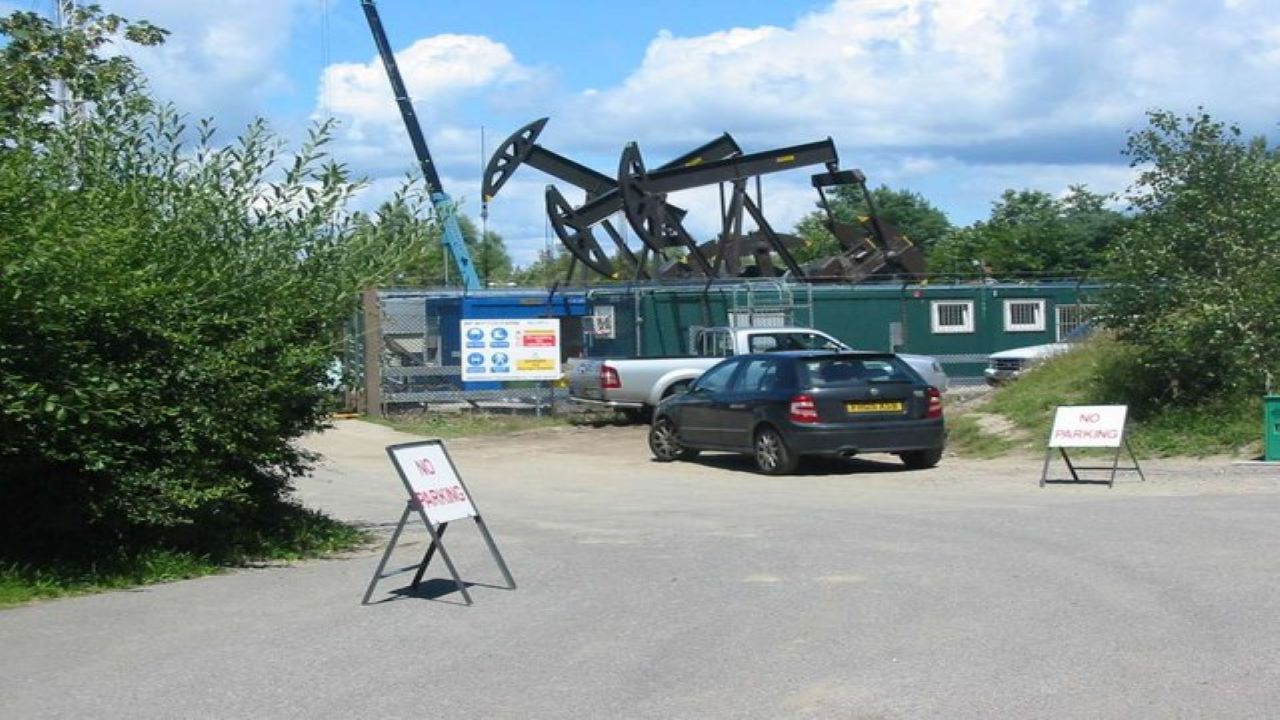
Albury is a small village in Surrey that will play host to one of the largest gas storage facilities in Europe if permission is given. |
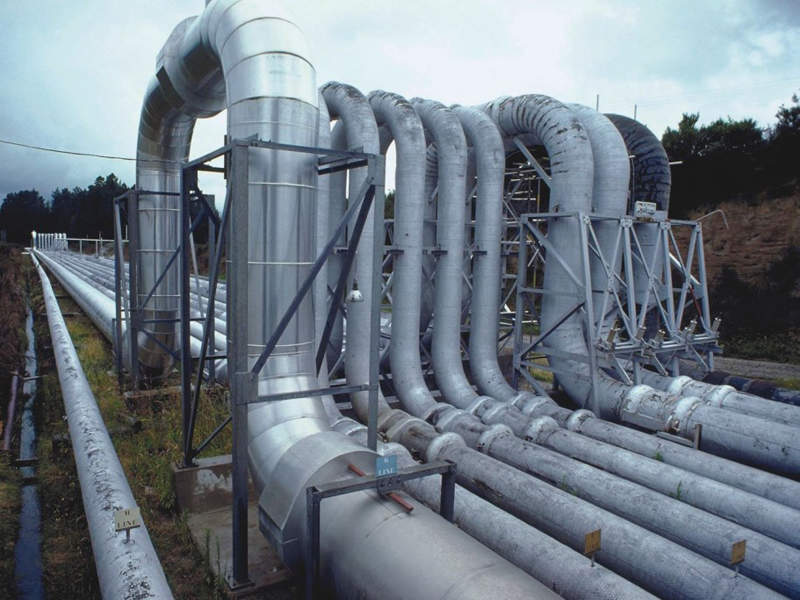
Connecting pipework will now no longer be laid near the Albury landfill. |
Odorants such as butanethiol will be removed prior to storage. |
The natural gas will be stored 2,100ft below ground in a depleted gas / oil reservoir. |
The reservoir is in a sandstone geology that should provide the stability and impermeability required. |
|
| Bahia de Bizkaia Regasification Plant | ||
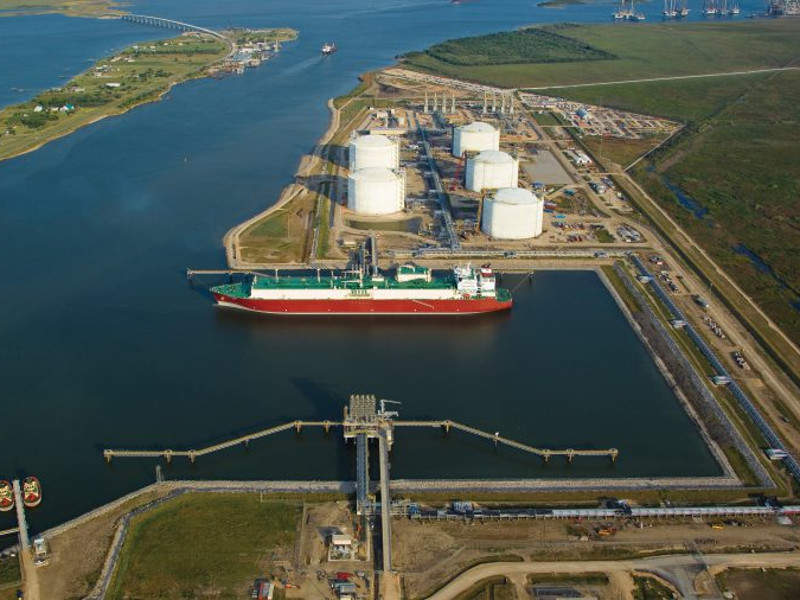
Bahía de Bizkaia or BBG is a regasification facility located in Bilbao, Spain. |
BBG's main activity includes regasification of LNG. |
The LNG is brought on gas tankers. |
| Blake Oil Field Exploitation | ||
The Asian Hercules lifted the new water injection module to the Bleo Holm at the McNulty shipyard in Newcastle. |
Chemical injection facilities had to be expanded for production of black crude. |
Bleo Holm, nearing completion, begins preparation to sail. |
The completed Bleo Holm ready to sail. |
Bleo Holm sets sail back to the Ross field with modifications complete for the tie-in of the Blake field. |
|
| Blue Stream Pipeline | ||
The route of pipelines in Europe. |
Construction of the Blue Stream pipeline was not thought to offer any environmental risk. |
Blue Stream pipeline may well be extended to supply southern Europe. |
The Blue Stream pipeline forms an important route for Russian gas across the Black Sea. |
The laying of the Blue Stream pipeline used much pioneering technology. |
|
| British Sugar Biofuel Plant, Wissington, Norfolk | ||
The British Sugar biofuel plant at Wissington, Norfolk. |
The Wissington facility is perfectly placed to make use of surplus sugar beet, a locally grown produce. |
Bioethanol and biobutanol are the renewable / sustainable fuels of choice. |
The sugar beet that will be processed at the plant is produced by suppliers from Norfolk. |
Wheat is an alternative feedstock for the Wissington biofuel plant. |
|
| Burgas-Alexandropolis (Trans-Balkan Crude) Pipeline | ||
The route of the new trans-Balkan pipeline will traverse Bulgaria and Greece. |
Russia is now the leading non-OPEC oil producer. |
The Burgas-Alexandropolis pipeline will have some difficult terrain to negotiate during construction. |
The Bosphorus is a bottleneck where Russian tankers are currently held up and the trans-Balkan pipeline will relieve this. |
The Aegean will now be an area where oil tankers operate on a regular basis and this could have disastrous consequences for the Greek tourist trade if spillage occurs. |
|
| Cardiff Biodiesel Refinery | ||
The Cardiff biodiesel refinery site has been leased from Associated British Ports. |
The biodiesel refining plant will produce 100,000t of biodiesel a year. |
Lurgi are planning the new Cardiff biodiesel facility. |
The refinery site in the Port of Cardiff has excellent rail, road and sea links. |
By April 2008 diesel sold in the UK will have to have 2.5% of biodiesel in its blend. |
Planning has now allowed for a second phase to the Cardiff biodiesel facility and a fully integrated refinery. |
| Cartagena Refinery | ||
Cartagena is the smallest of Repsol’s five refineries in Spain. |
Cartagena's sister operation Puertollano. |
The Cartagena project forms part of Repsol’s programme to adapt its installations for the production of clean transportation fuels. |
| Dragon LNG Terminal | ||
The LNG storage tanks at the Dragon LNG facility. |
LNG will be supplied right across the UK from the Dragon LNG terminal near Milford Haven in Wales. |
The LNG storage tanks have a double skin design for safety. |
The Dragon LNG facility is built on the site of the old Chevron refinery. |
The area is environmentally sensitive but safety of the Dragon LNG facility has been established. |
|
| El Musel LNG | ||
The new LNG plant will become operational in 2010-2011. |
There will be storage capacity of 1,200,000 cubic metres in the second phase – enough for 35 days. |
LNG tankers of 250,000 cubic metres will be able to dock at the facility. |
| ESPO Pipeline, Siberia | ||
The ESPO pipeline will cross areas of high seismic activity, where it will be coated with three layers of extruded polyethylene. |
The ESPO pipeline is being built in two phases and will traverse Siberia. |
The pipeline will have its own power station to provide pumping stations with power even in Arctic conditions. |
The ESPO pipeline has been diverted away from Lake Baikal because of environmental concerns. |
There may well be branches from ESPO II to serve Russian refineries producing for the domestic market. |
|
| Gateway Gas Storage Facility | ||
The Gateway Gas Storage Facility is situated southwest of Barrow-in-Furness, UK, 25km offshore in the east Irish Sea. |
Gas will be transported to a site near the South Morecambe gas terminals. |
GGCF will be linked to the shore via a new pipeline across Walney Island and Piel Channel. |
| Gaz de France LNG Terminal, | ||
A tanker discharging at the LNG terminal. |
Tanker being positioned with three containment tanks in the background. |
Tanker being unloaded with Ville de Saint-Nazaire in the distance. |
One of the latest Moss-type containment tankers Provalys being towed into the LNG facility to unload. |
Provalys being unloaded at the Montoir de Bretagne LNG terminal. |
|
| Grain LNG Terminal Expansion, Kent | ||
The extent of the Grain LNG site in Kent. |
The original four storage tanks at the phase one terminal on the Isle of Grain. |
A tanker unloading LNG at the Grain terminal. |
The inside of one of the new highly insulated LNG storage tanks at the Grain LNG terminal. |
A map showing the location of the Isle of Grain near the Thames Estuary. |
|
| Grupa Lotos Refinery Upgrade, | ||
The Gdańsk refinery processes six million tons of crude a year. |
The Grupa Lotos refinery is in the midst of a technical upgrade programme. |
Grupa Lotos has a network of 500 filling stations across Poland and the Czech Republic. |
The refinery will be processing 10.5 million tons of crude oil a year by 2010. |
There are three main contractors working on projects at the refinery. |
|
| Humber Refinery | ||
The front entrance of the Humber refinery. |
The Humber refinery at night after the fire, once repairs had been carried out. |
The extent of the Humber refinery site with fractionating column and storage tanks. |
On the 16th April, 2001 there was a major explosion at Conoco's Humber refinery. |
A view of the Conoco refinery at South Killingholme. |
Map showing location of the Conoco refinery. |
| Italiana Energia Servizi (IES) Mantua Refinery | ||
The Mantua refinery has been on the site since 1946. |
The processes at the Mantua refinery are configured towards gasoil and bitumen. |
The Mantua refinery is undergoing refurbishment and also the installation of a new gasoil hydrodesulphurisation unit. |
The crude oil for the refinery is transported from the coast depot (serviced by tanker) by pipeline to the refinery. |
Mantua seems to be a strange site for a refinery as the area used to primarily agricultural. However, the refinery is central to the fuel supplies of the Lombardy region. |
|
| Kollsnes Gas Processing Plant | ||
The Kollsnes gas processing plant became operational in October 1996. |
The Kollsnes plant separates NGL from rich gas. |
Aker will take up mechanical work, piping tie-ins, pre-assembly units, pipe-racks and installation work at the Kollsnes plant. |
| Lindsey Oil Refinery, | ||
Lindsey oil refinery process unit pipework and drum. |
The Lindsey oil refinery is wholly owned by Total, and is located five miles from the Humber River in North Lincolnshire. |
Lindsey oil refinery process unit pipework and HDS heat exchanger. |
Between 85% and 95% of the refinery's feedstock is sourced from the North Sea. |
||
| Livorno LNG Terminal | ||
The LNG vessel is converted to an offshore storage and regasification facility. |
Transfer of LNG between vessels is easy from an engineering point of view, and offshore facilities are environmentally desirable. |
Italy has a number of LNG projects under development. |
The gas transfer from ship to ship and ship to shore can be controlled as required. |
There are quite a number of options for LNG terminals; they are not just a land-based facility. |
|
| Milazzo Refinery | ||
The Milazzo plant. |
Distillation equipment at the Milazzo refinery. |
Hydrocracking equipment at the Milazzo refinery. |
The FCC facility at Milazzo. |
Hydrocracking tower in the Milazzo refinery. |
The Milazzo refinery seen from the sea. |
The control room at the Milazzo plant. |
||
| Nabucco Gas Pipeline | ||
The route of the Nabucco gas pipeline. |
The Nabucco pipeline will begin construction in 2009. |
The pipeline route will allow gas to be transported from Iran, Georgia and Turkey. |
The Nabucco pipeline will terminate at the Austrian hub of Baumgarten. |
The final capacity of the Nabucco pipeline will be 31 billion cubic metres a year. |
|
| Neste Oil Naantali Refinery | ||
The Naantali refinery can distil approximately 58,000bpd of oil and produces a range of speciality petroleum products. |
A new automation system was installed at the Naantali refinery in 2007 by Metso to combine all separate processes into one controlled unit. |
All of the crude oil to be refined in Naantali is transported by boat, while 40% of end products are carried by sea. |
| Neste Oil Porvoo Refinery Diesel Project, Porvoo | ||
The Fortum Oil and Gas Oy Porvoo refinery at Kilpilahti, Finland, is expanding its diesel production facilities. |
The expansion is in response to a perceived shortage of diesel for the consumer and commercial markets in north-western Europe. |
The refinery will introduce a new Heavy Residue Conversion (HRC) unit (residual oil cracking unit), which produces sulphur-free high-quality diesel fuel. |
Fortum's existing diesel fuel production capacity at Porvoo is 4 million tonnes per year (85,000 barrels per day). |
The crude oil used in the Porvoo refinery is mainly REB (Russian Export Blend) and oil extracted from the North Sea resources, mainly carried in by tankers. |
Map of Finland showing where Porvoo is situated. |
Neste Oil's first unit for renewable NExBTL-diesel started at the Porvoo refinery in 2007. |
Another renewable NexBTL diesel unit started at Porvoo in summer 2009. |
At Neste Oil's Porvoo refinery a new production line was started in 2007. |
| Nord Stream Gas Pipeline (NSGP), Russia-Germany | ||
The 1,200km-long Nord Stream Gas Pipeline (NSGP) will transport natural gas from Russia to Germany. Marine gas pipelines will be used for gas supplies to Great Britain, Finland, Sweden and other counties. |
An MoU between OAO Gazprom and BASF AG was signed in Hannover, Germany. |
Scheduled for completion in 2010, the NSGP is being built at an estimated cost of more than €4bn by a German-Russian joint venture of JSC Gazprom, BASF AG and E.ON AG. |
The construction of the Nord Stream gas pipeline is proceeding and should be completed on schedule. |
||
| North Adriatic LNG Terminal | ||
Construction of the North Adriatic 'floating island' starts at the Aker Kvaerner yards in Southern Spain. |
The dry dock has had to be modified to accommodate the construction. |
The concrete structure is enormous and must be constructed to endure coastal waters for at least 30 years. |
Construction of the concrete platform for the North Adriatic LNG terminal is well underway. |
The LNG terminal platform reaches its full height. |
How the North Adriatic LNG platform will look out at sea off the Italian coast. |
One of the first offshore LNG platforms will be a great engineering achievement. |
||
| Odessa Refinery Plant | ||
Odessa underwent reconstruction between 2005 and April 2008 until production stopped again in October 2009. |
Production started again in November 2009 after the state-owned oil transport operator suggested a new route. |
As of 2008 when production was forced to stop, 2.04 million tons of oil had been extracted at Odessa. |
| Ormen Lange Gas Processing Complex and Langled | ||
The Ormen Lange processing plant will be located at Nyhamna in Aukra municipality in Møre og Romsdal, Norway. |
Gas from Ormen Lange will be imported from the production platforms to a processing plant at Nyhamna in Norway. |
Artists impression of the Ormen Lange gas complex. |
Nyhamna condensate area. |
Nyhamna process area. |
The unprocessed well stream will first pass to a reception facility (slug catcher) to remove liquid condensate slugs that might damage other areas of the processing facility. |
Nyhamna utility area hot oil heaters. |
||
| Port Jérôme Refinery and Desulphurisation Plant | ||
ExxonMobil is expanding and upgrading the refinery and desulphurisation plant at Port Jérôme – Gravenchon, France. The $200m front-end engineering and design contract was won by the French subsidiary of Foster Wheeler Ltd. |
The adjoining refineries of Port Jérôme and Gravenchon were integrated in 2000 to increase the efficiency of fuel, lube and chemicals refining to produce 230,000bpd of crude and 17,000bpd of lubricant. |
SCANfining is used for selective HDS and has a high number of product olefins with few reductions in octanes. It was developed by ExxonMobil and Akzo Nobel Catalysts to reduce hydrogen consumption over a low temperature and a low-pressure fixed-bed reactor. |
The SCANfining and OCTgain units at Port Jérôme – Gravenchon began operations in 1999 and by 2004 the new plant will be ready to take over operations. |
Mobil service stations now only sell low-sulphur versions of their gasoline and diesel fuels. |
|
| Porto Refinery | ||
Map showing the location of Porto. |
The Petrogal group is based here. |
Repair work at Petrogal's refinery in Sines. |
| Royal Vopak New Storage Terminal, Port of Amsterdam | ||
Vopak's second oil terminal at the Port of Amsterdam will have a storage capacity of 1.1 million m³. |
BAM Leidingen & Industrie will construct the terminal, with its first phase expected to be complete in 2011. |
The terminal will include state-of-the-art technology including Amsterdam's first vapour processing installation. |
| Saltend Bioethanol Plant, Hull | ||
The BP Saltend site in Hull where the new plant will be constructed. |
Sugar beet could provide a good feedstock for the Saltend bioethanol plant. |
A butanol molecule. Butanol will provide an excellent biofuel. |
The biofuels will be marketed through BP's chain of filling stations. |
Wheat is the feedstock of choice for the plant at the moment and ABF will provide it from their agricultural partners. |
|
| Sarroch Refinery | ||
Sarroch refinery is about 20km south of Cagliari on the south-western coast of Sardinia. |
The refinery's production in 2009 was expected to be 13.8Mt to 14Mt. |
Liquefied petroleum gas (LPG), gasoline and diesel form more than 80% of the project's output. |
The refinery is within easy reach of European and north African countries. |
A new gasoline desulphurisation unit was built at the refinery in 2008. |
|
| Shannon LNG Terminal | ||
The Shannon project will provide the ROI with a new source of gas. |
The Shannon LNG facility will be constructed in County Kerry on a landbank site. |
The Shannon LNG project will be able to send out around three million tons per annum. |
There could be up to four LNG storage tanks at the Shannon facility. |
A new 30km pipeline will be required to connect to the national grid as part of the €500m project. |
|
| Shtokman Gas Project | ||
The Shtokman field is a significant new source of gas. |
The environment presents hazards. |
Two production platforms are being constructed. |
The Shtokman Gas Field is about 370 miles north of the Kola Peninsula. |
A closer view of the location. |
The Arctic conditions will be challenging for gas production. |
The new platforms will be finished in 2011. |
||
| Snohvit LNG Export Terminal, Melkoya Island, | ||
The Snohvit gas production system will be one of the first in Europe to use a subsea production platform. |
The Snohvit LNG project on Melkoya Island is being constructed to exploit the resources of three gas fields in the Barent Sea (Snohvit, Albatross and Askeladd) which have estimated reserves of 300 billion m³ of LNG and 20 million m³ of condensate. |
LNG liquefaction process diagram. |
LNG compressor component. |
Computer rendering of the LNG facility on Melkoya Island. |
The heart of the LNG facility, the liquefaction plant, will be borne and operated on a gas liquefaction barge. |
| Sonhoe Heavy Crude Upgrader, Teeside | ||
The Sonhoe refinery will be built in Teesside on a brownfield site. |
The majority of the oil processed will come from the North Sea. |
Teesport was one of the deciding factors in siting the upgrader as it is a deepwater port one of only three in the UK. |
The site at Wilton is looked over by Mike True MD (right) and Howard Simons, technical director (left). |
The three sites being developed for the Sonhoe upgrader programme. |
|
| South Stream Pipeline | ||
The proposed route of the South Stream pipeline. |
The CEO of Eni (Scaroni) and the CEO of Gazprom (Miller) signed a memorandum of understanding in November 2007 about the project. |
The Beregovaya compressor station. |
Planning consent for the South Stream pipeline is now required from the EU. |
The pipeline has been estimated to cost up to €10bn. |
|
| South Wales Gas Pipeline | ||
The Brecon to Tirley section of the South Wales gas pipeline under construction. |
Crossing the River Tawe on the route from Milford Haven to Aberdulais. |
The 48in pipeline being positioned in the ground. |
Welding the sections together: the South Wales gas pipeline has a design life of at least 30 years. |
Top soil being replaced as part of the restoration of the countryside above the pipeline. |
Construction of the South Wales gas pipeline underway. |
| Srpski Brod Oil Refinery | ||
The Srpski Brod Oil Refinery. |
Visible signs of critical war damage to the Srpski Brod Oil Refinery. |
General Sam Gibson, (left) Commander of the SFOR CIMIC Task. |
Lt. Peter Nilsen (left) of the CIMIC Civil Engineer Team and Mr. Milenko Micic, Chief of Development and Investment for Srpski Brod refinery, while on a CIMIC site reconnaissance to the Srpski Brod oil Refinery. |
||
| Stanlow Refinery | ||
The refinery can convert more than 18mt of crude oil per annum. |
Stanlow Refinery is located on the south bank of the Manchester Ship Canal near Ellesmere Port, UK. |
Stanlow Refinery on the south bank of the Manchester Ship Canal near Ellesmere Port in Cheshire, England. |
Stanlow Refinery is part of Shell's Stanlow Manufacturing Complex. |
An aerial view of Stanlow Refinery, England. |
|
| Swinoujscie LNG Gas Terminal, | ||
Polskie Gornictwo Naftowe i Gazownictwo is putting up 45% of the finance. |
Swinoujscie is on the Baltic coast and an ideal port for the LNG terminal. |
Poland is anxious to cut down on imports of gas from Russia. |
The Swinoujscie LNG terminal will be near a power station and also a chemical plant. |
LNG supply contracts are under negotiation and LNG transport ships will be required. |
|
| Tarragona Refinery | ||
General view of the Tarragona Refinery. |
Tarragona, where the refinery is located, is in Catalonia, on the Mediterranean coast of Spain. |
Repsol has an extensive range of distribution outlets for the refinery's products. |
| Whitegate Oil Refinery | ||
Whitegate oil refinery near Cork, Ireland |
Debutinizer Unit belonging to Irish Refining at its Whitegate refinery. |
Kerosene stripping vessel at the Whitegate refinery. |
The Irish Refining refinery, the only one in Ireland. |
Map showing location of Cork. |
|